
A culture that can grow
with the business.
Culture, employer brand
and employee experience.
- Client
- Palmary Group
- Sector
- Food & consumer goods
- Our role
- Culture, employer brand & employee experience
- Market
- Algeria
Palmary’s products already have a place in the everyday lives of Algerians. Behind those familiar products, the group was entering a new stage in its own development: bringing different entities, sites, professions and histories into a more coherent organization.
Much of its culture had grown through the convictions of its founders and the experience of people who had built the business alongside them. As the organization expanded, that culture needed a language that could travel further: something managers could discuss, teams could recognize and new colleagues could understand.
Our work connected that ambition to the foundations of a values charter, an employer-brand territory, internal communication, recruitment tools and a learning platform prototype. Each addressed a different part of the same challenge: making the culture of a growing group easier to understand, share and carry forward.
Inside the story
Understanding what had built Palmary
The starting point was the group’s own history. Before giving its culture a formal expression, we needed to understand the convictions, decisions and ways of working that had contributed to its success.
We conducted interviews with the founders and senior leaders, exploring what they considered essential to Palmary: the standards they defended, the behaviours they valued, the principles that guided difficult decisions and the qualities they wanted future generations of managers to preserve.
These conversations established the leadership perspective on the culture. They also clarified the ambition for its next stage, giving us a basis for examining how the group’s founding convictions connected with the realities experienced across the organization.
Making managers part of the definition
A shared culture has to make sense to people working in different environments. Production, commercial teams, support functions and individual sites each experience the organization through their own responsibilities and pressures.
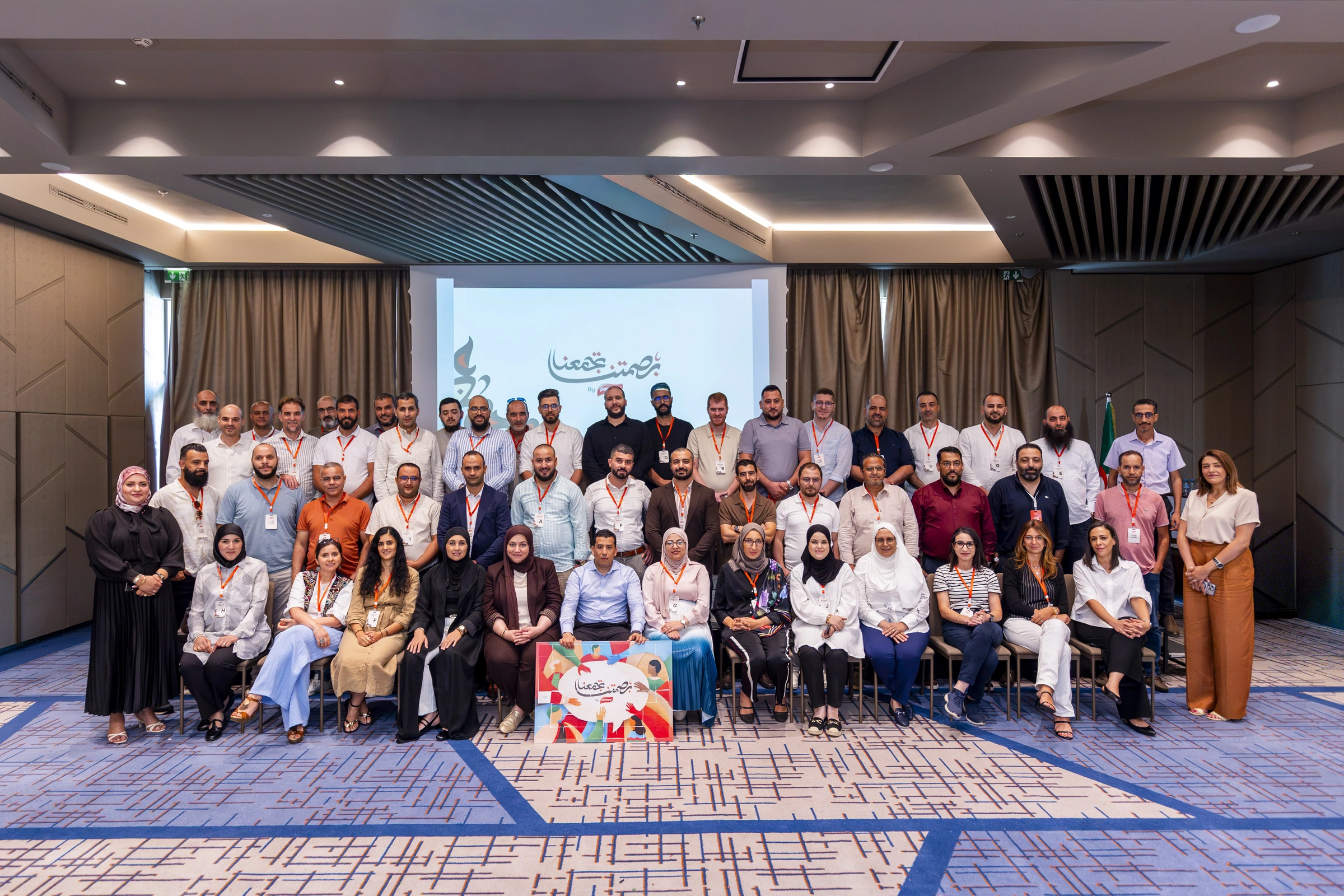
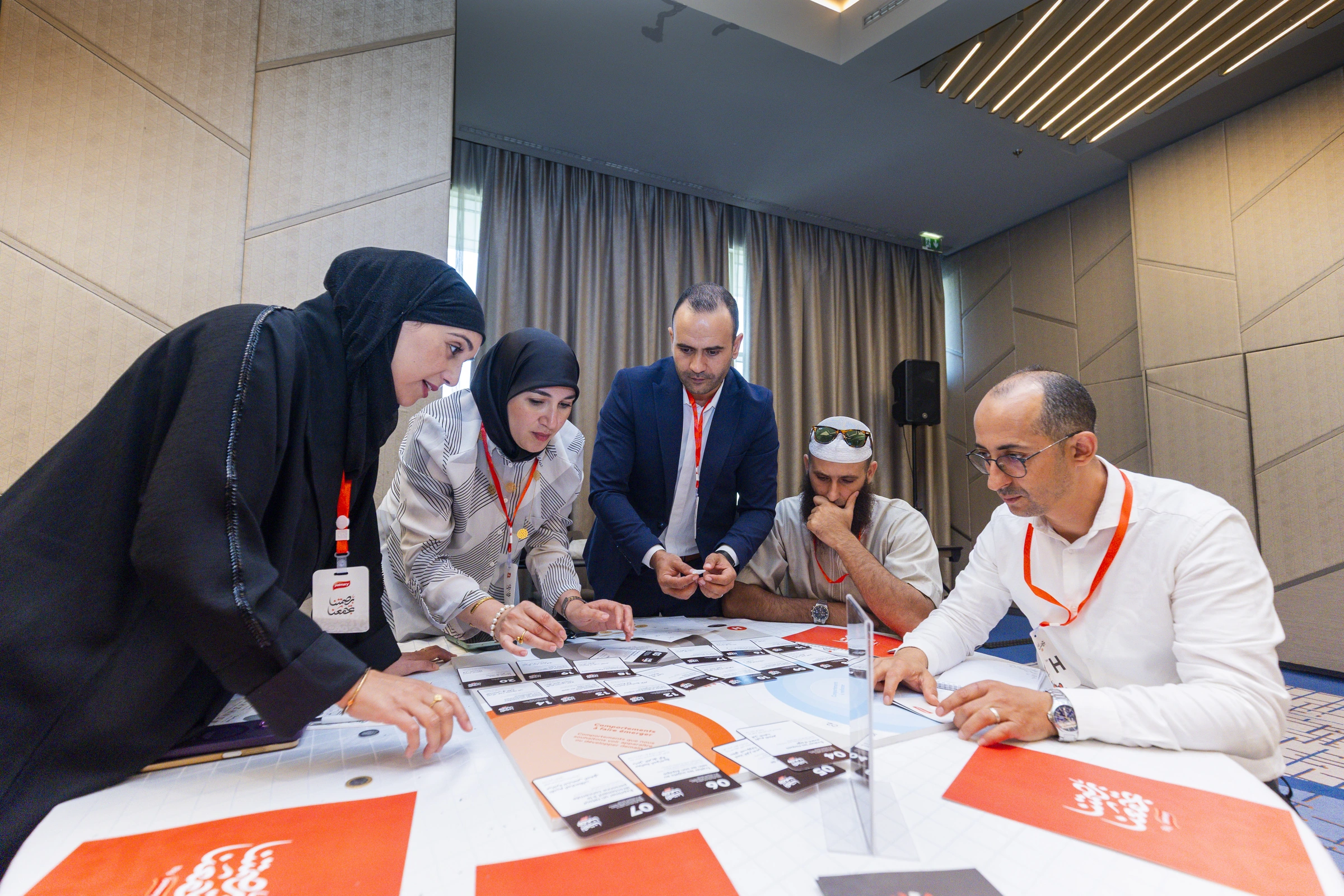
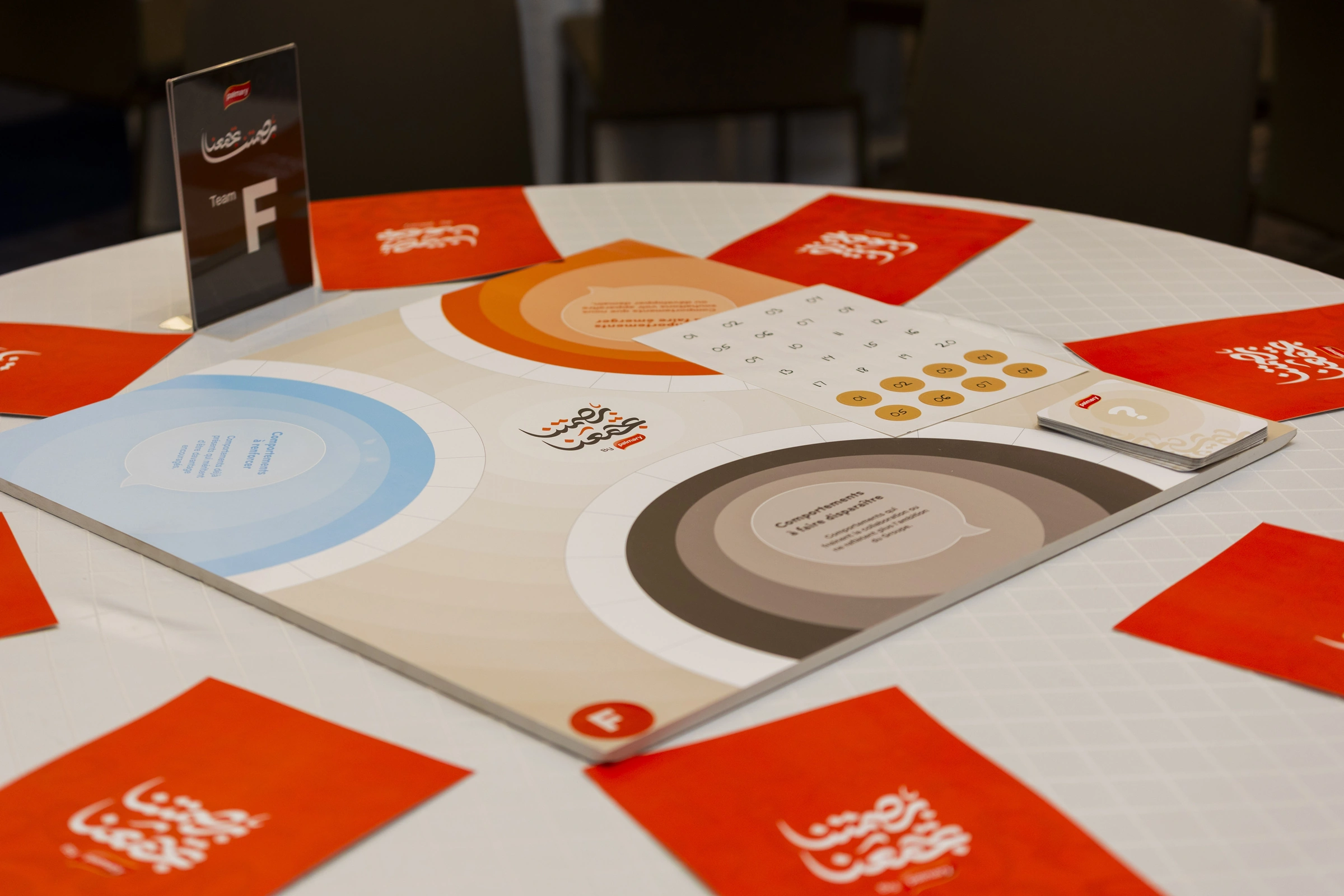
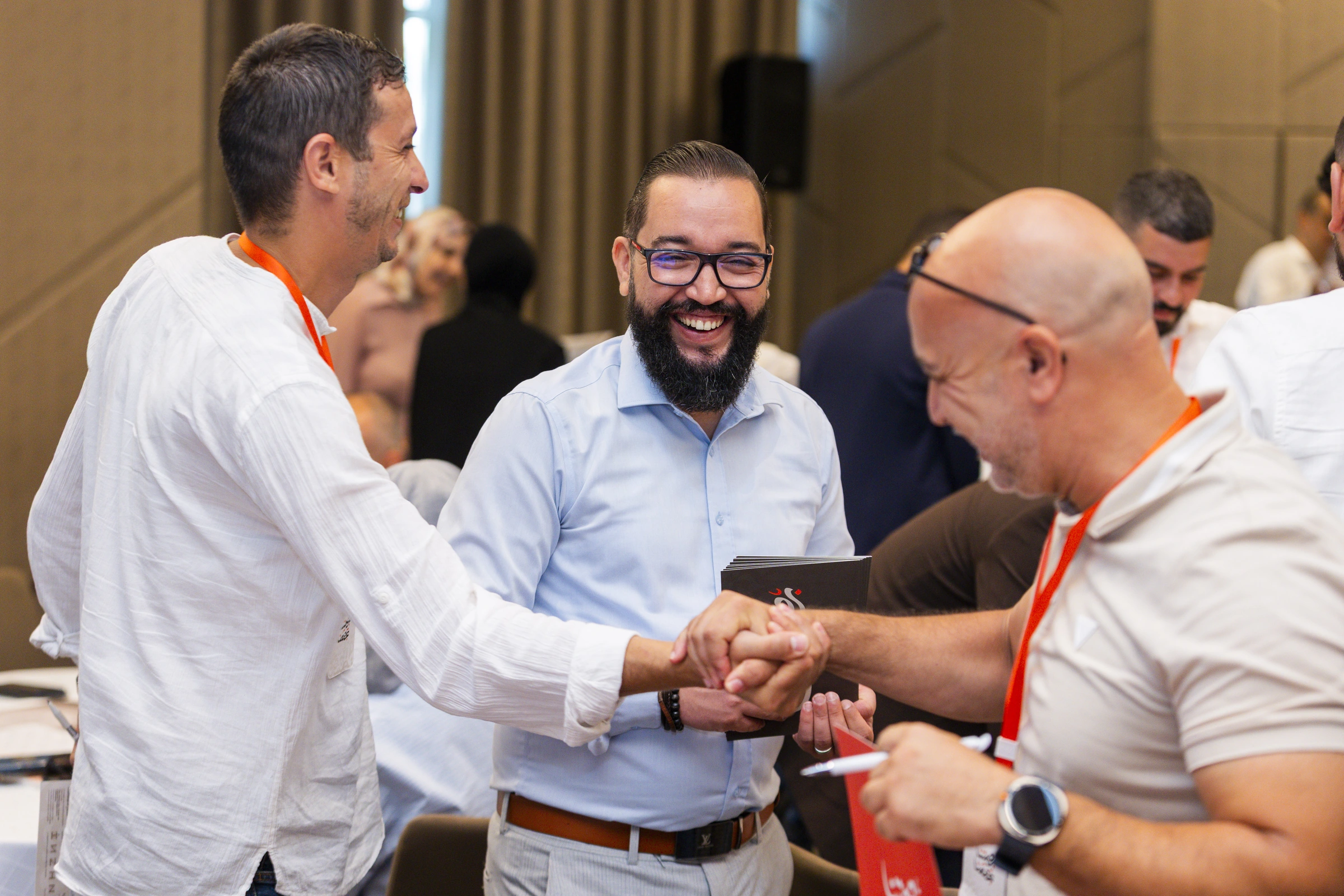
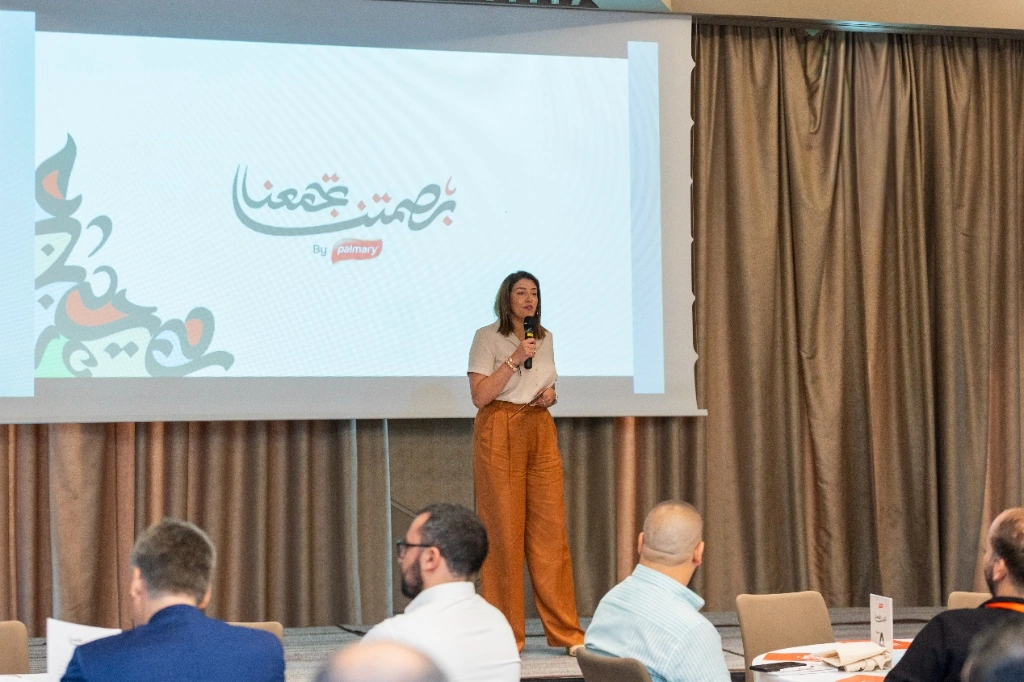
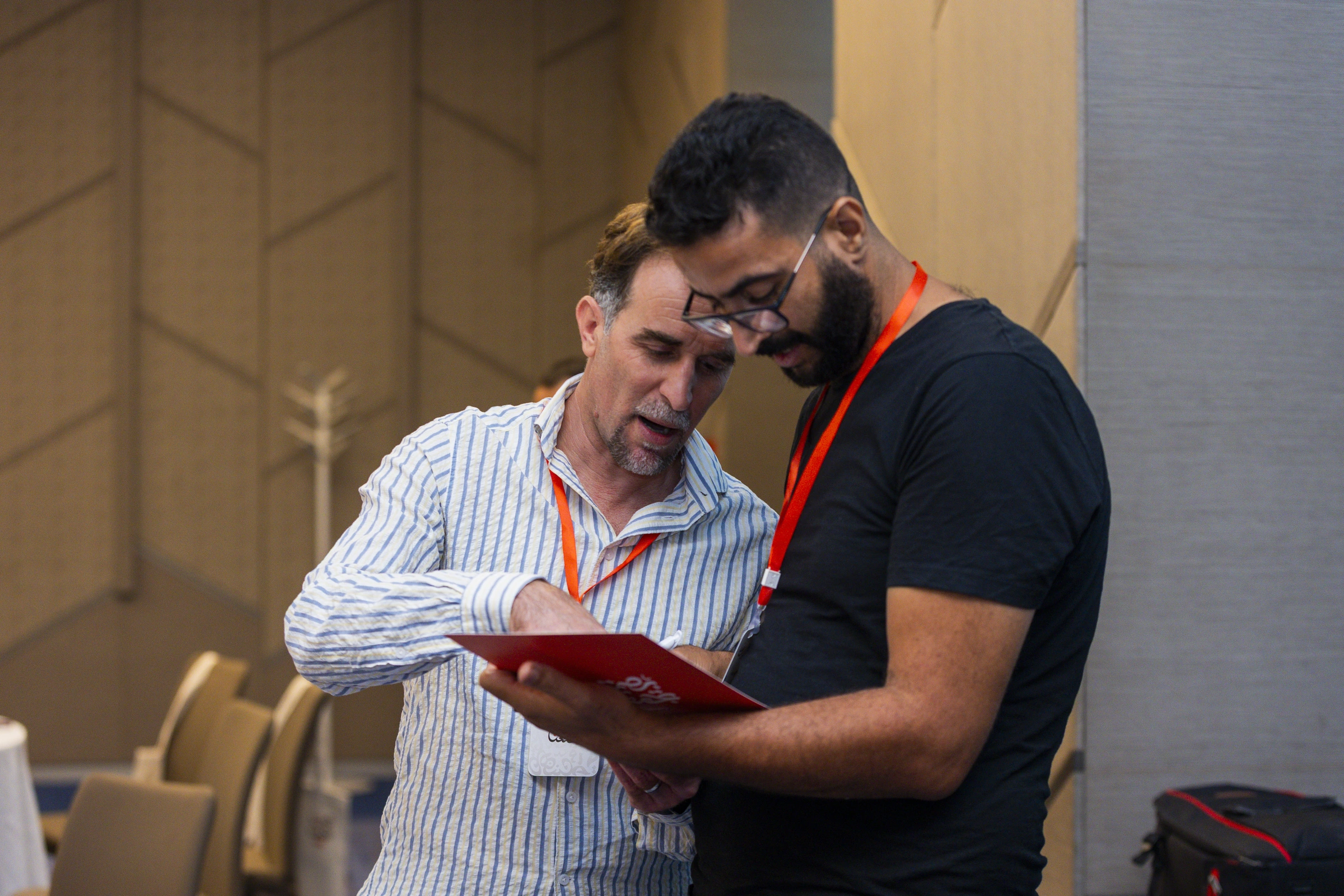
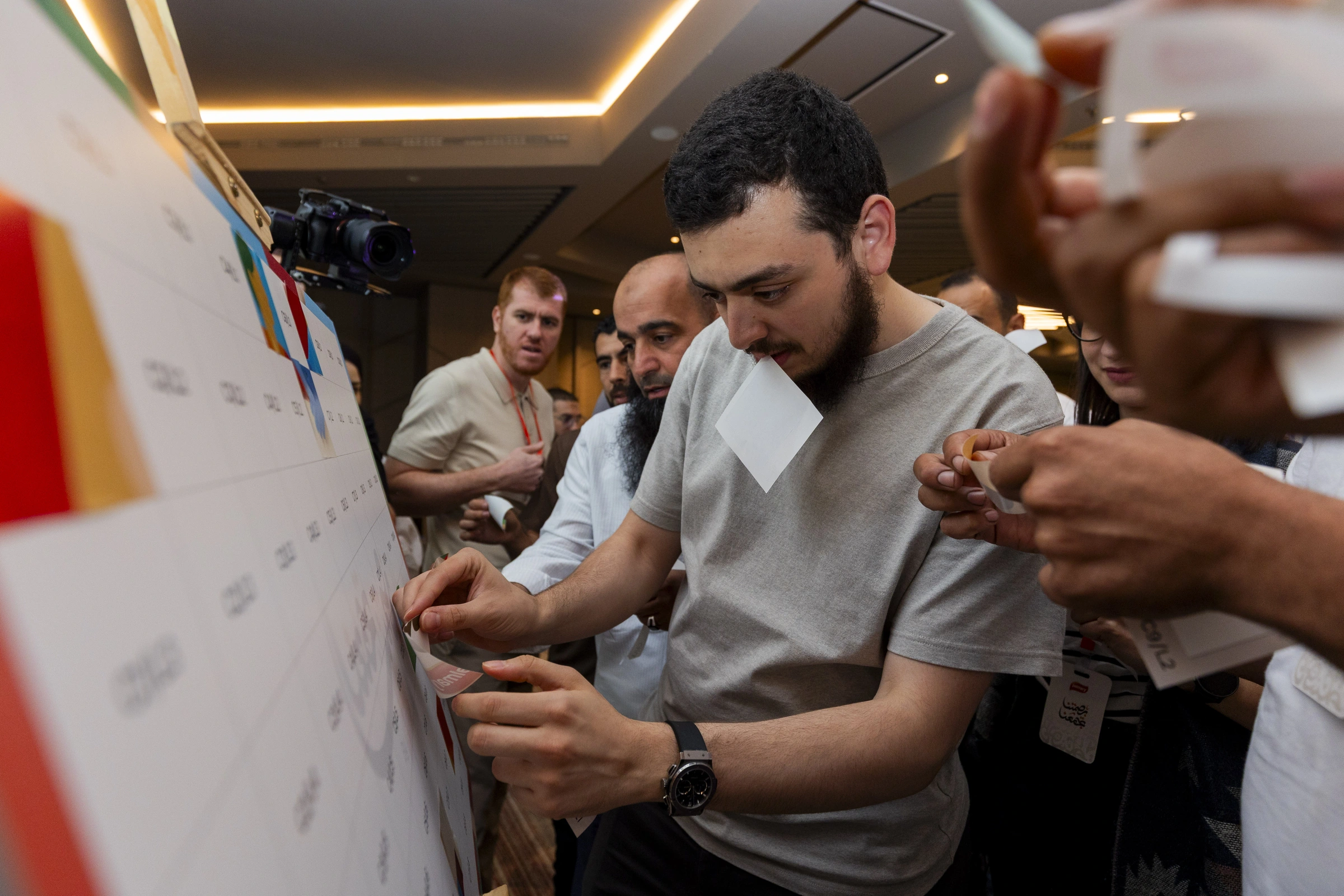
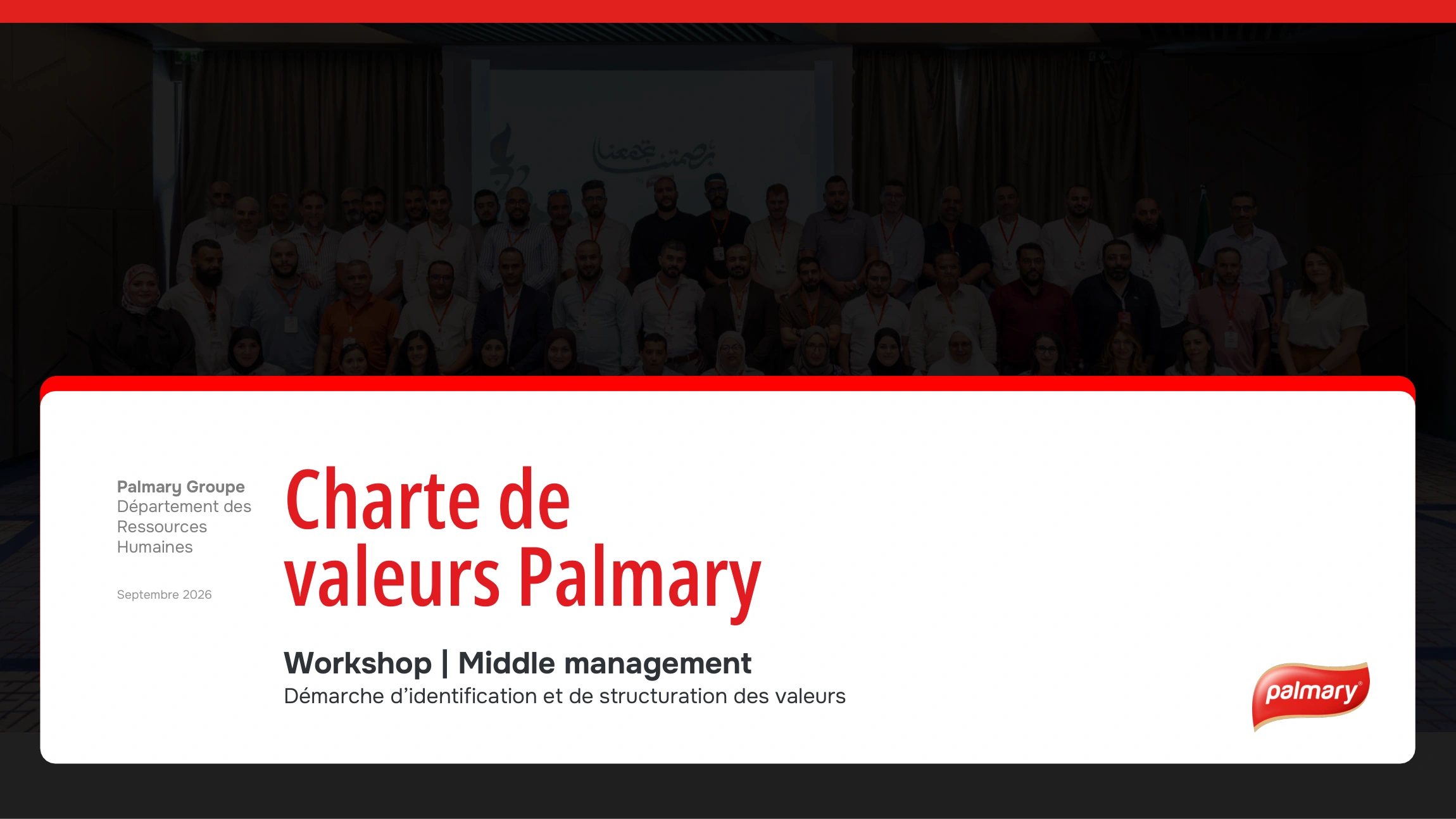
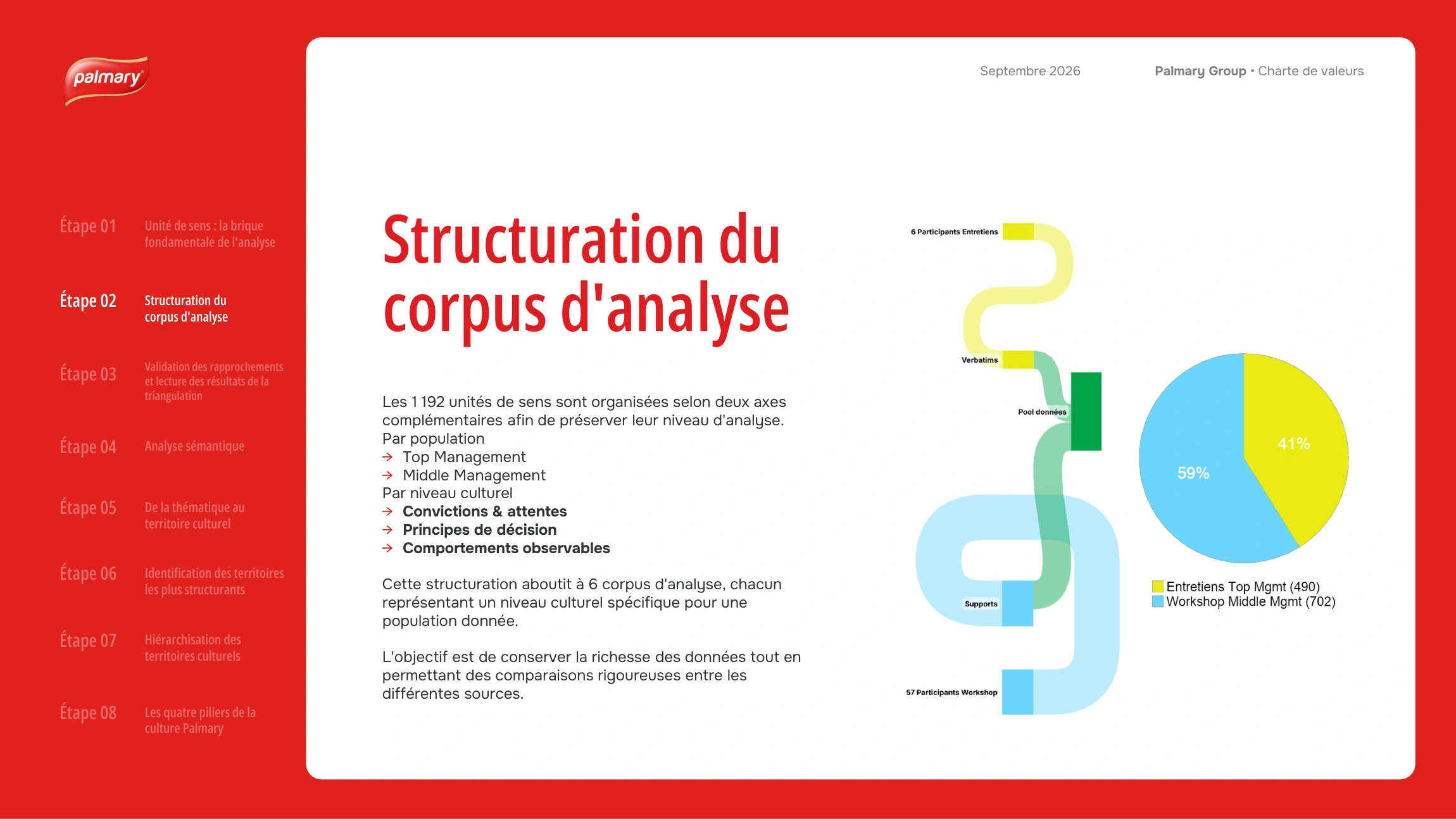
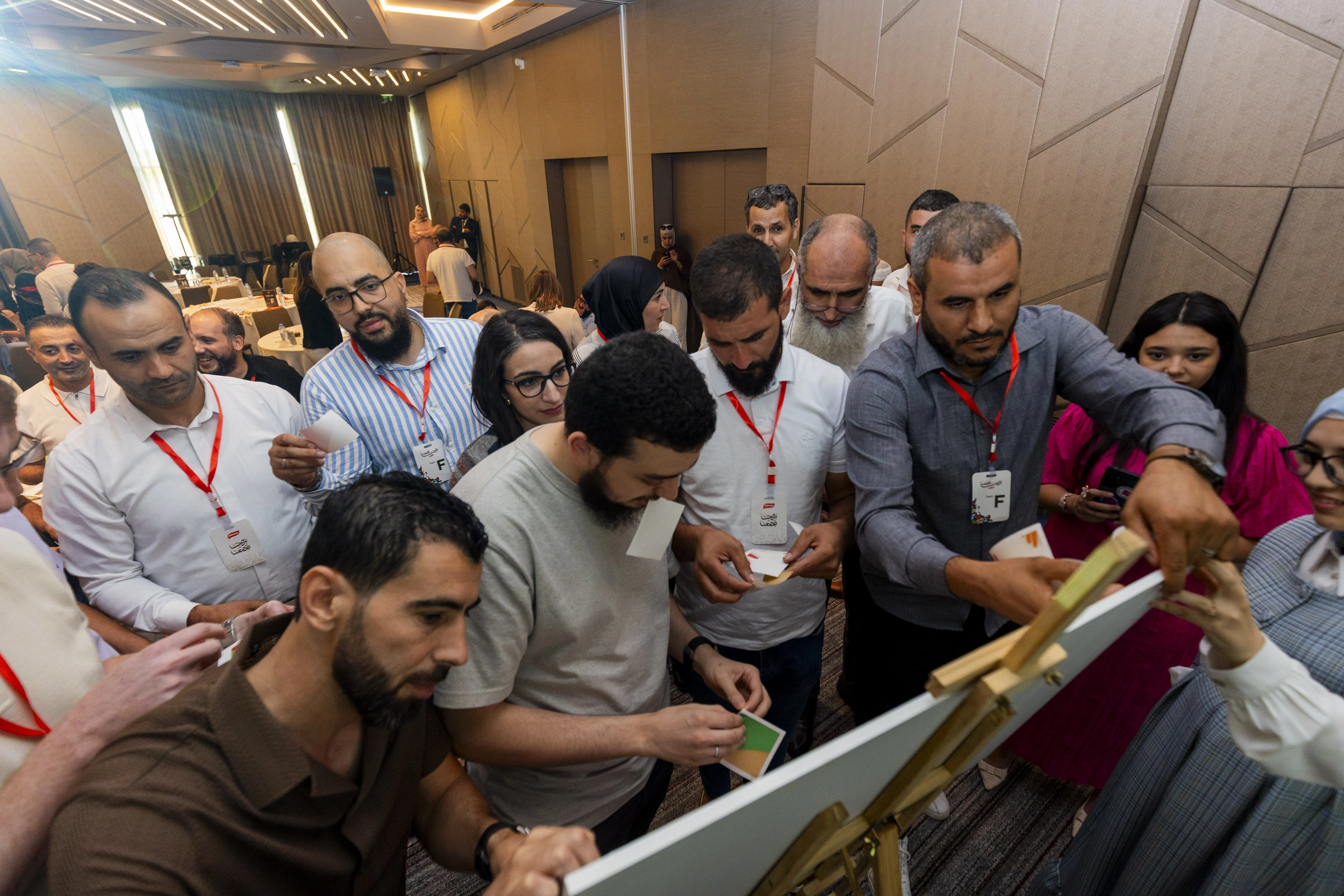
We designed and facilitated Basmetna Tedjmaana, a collective workshop bringing managers from across the group into the process. Decision scenarios, guided discussions and mapping exercises asked participants to work from situations they knew: moments of pride, sources of frustration, examples of cooperation and choices made under pressure.
The workshop produced concrete material for the values work. Participants identified behaviours to preserve, strengthen or change, and discussed the convictions behind their decisions. Their contributions brought the leadership ambition into contact with the experience of people responsible for putting it into practice.
Turning lived experience into a shared language
The interviews and workshop created a rich body of material. The next task was to turn those contributions into a clear reading of the culture.
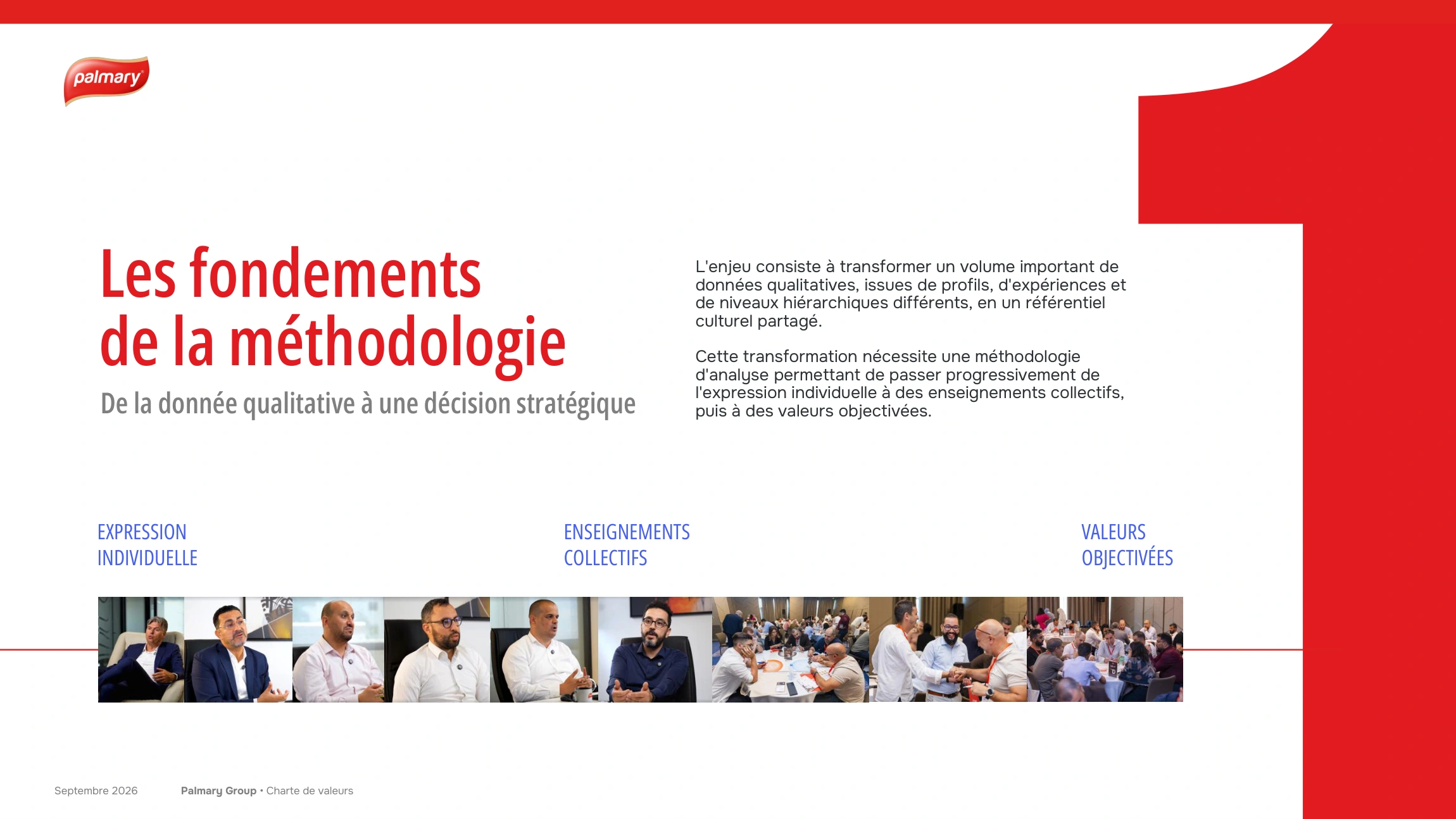
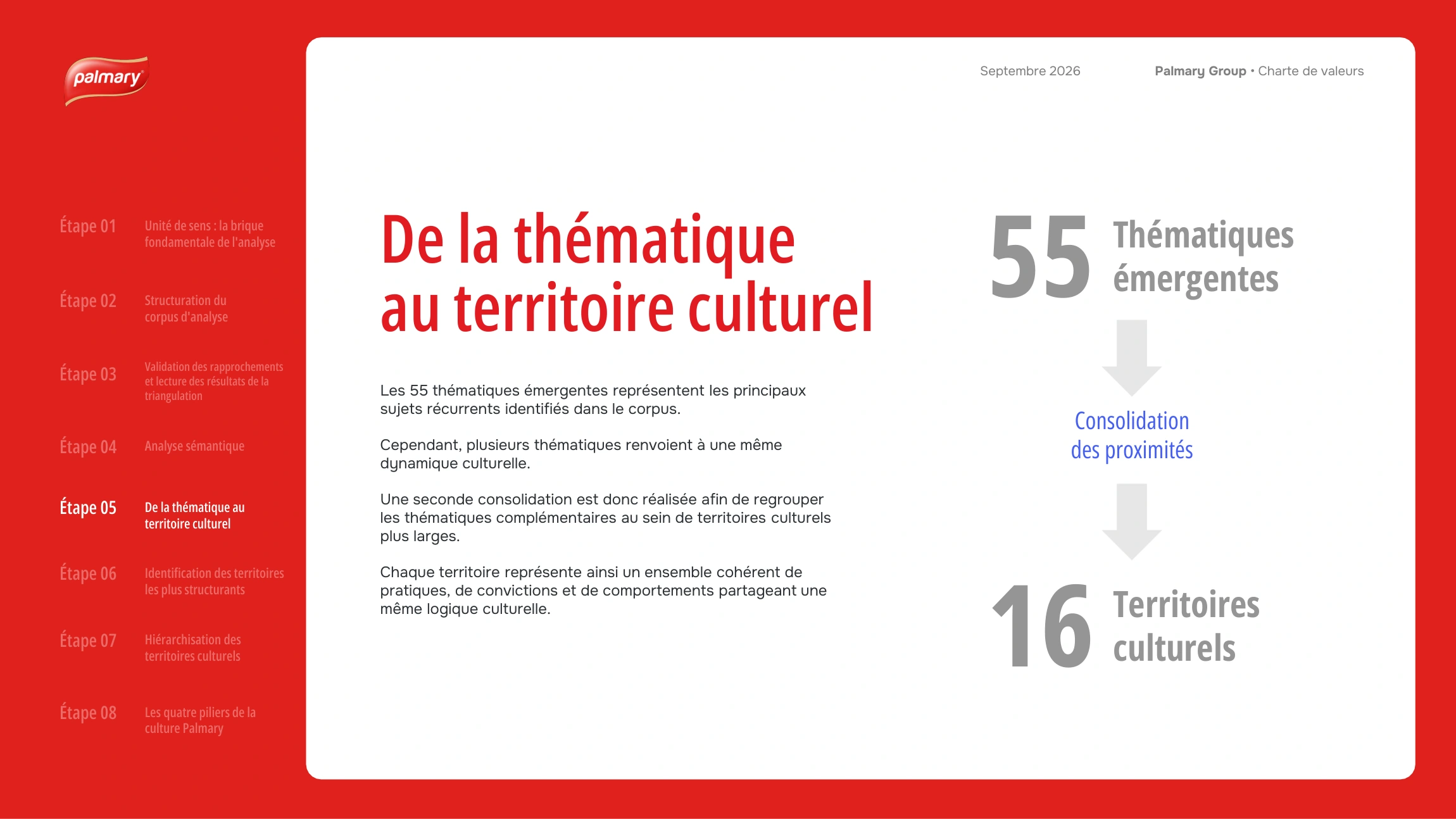
We consolidated the findings, grouped recurring ideas and compared what people believed, how they made decisions and what they observed in everyday work. This helped distinguish established cultural strengths from qualities the organization wanted to develop further.
The synthesis brought six central notions into focus: excellence, trust, collective effort, transmission, ambition and progress. These became working territories for developing the charter’s language and meaning.
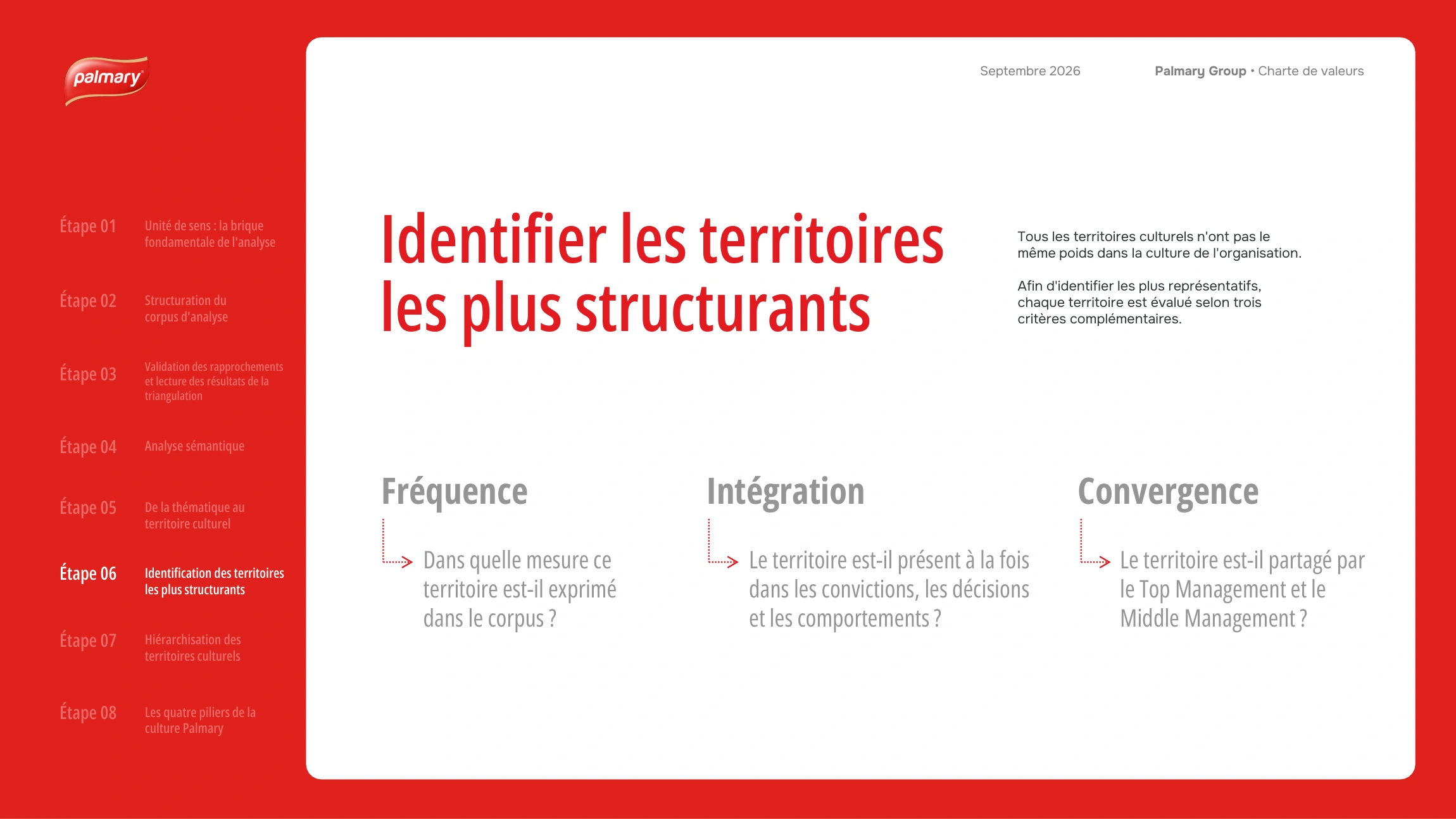
We tested the proposed values against practical questions. Were they authentic to Palmary? Clear enough to remember? Relevant across different jobs? Capable of guiding an observable behaviour? The work gave the charter a foundation grounded in the organization’s experience, together with a proposed path for bringing it into daily management.
Revealing the people behind the products
Palmary’s consumer presence created another opportunity. People knew the products, while the professions, skills and personal contributions behind them were less visible.
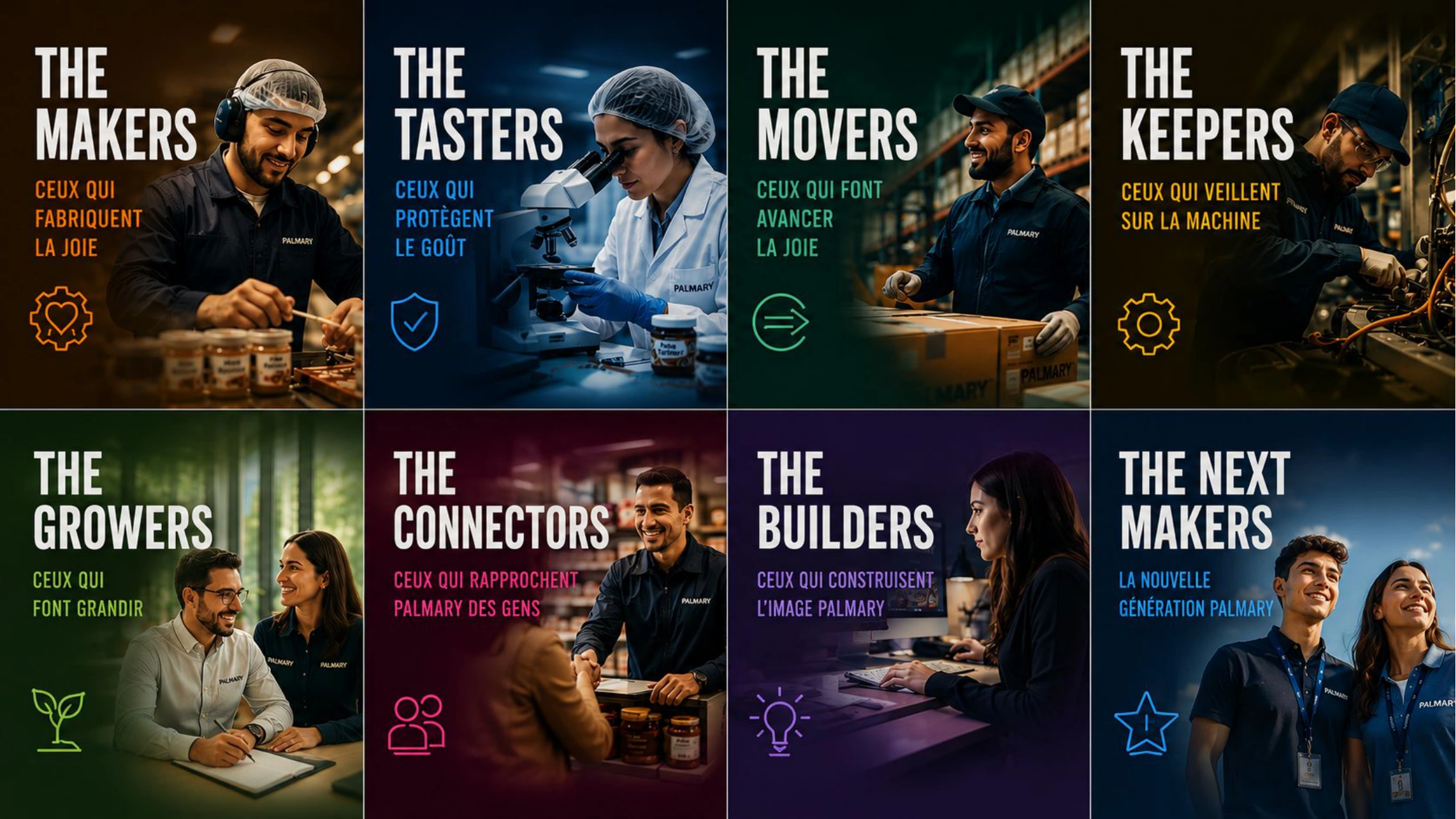
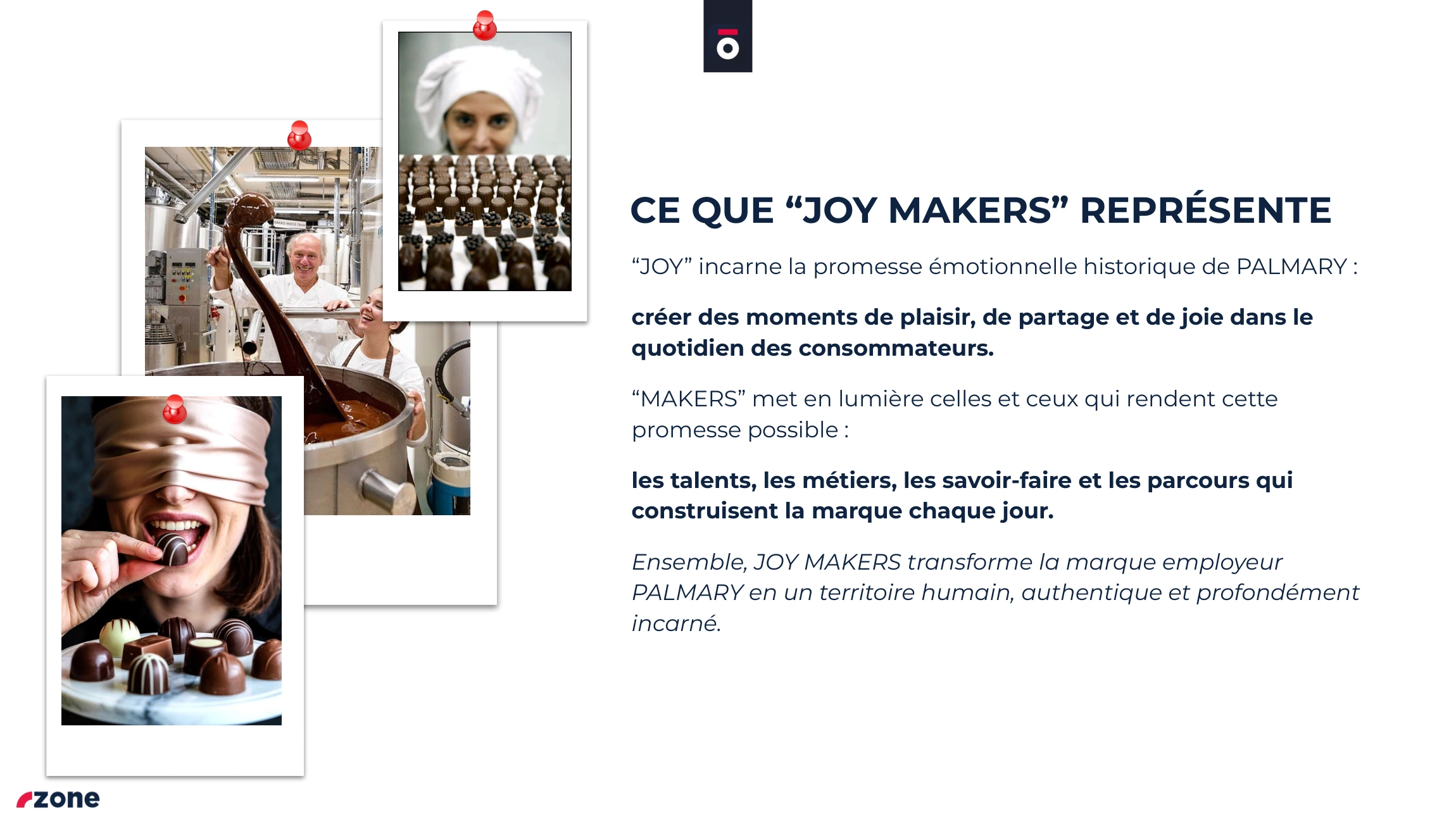
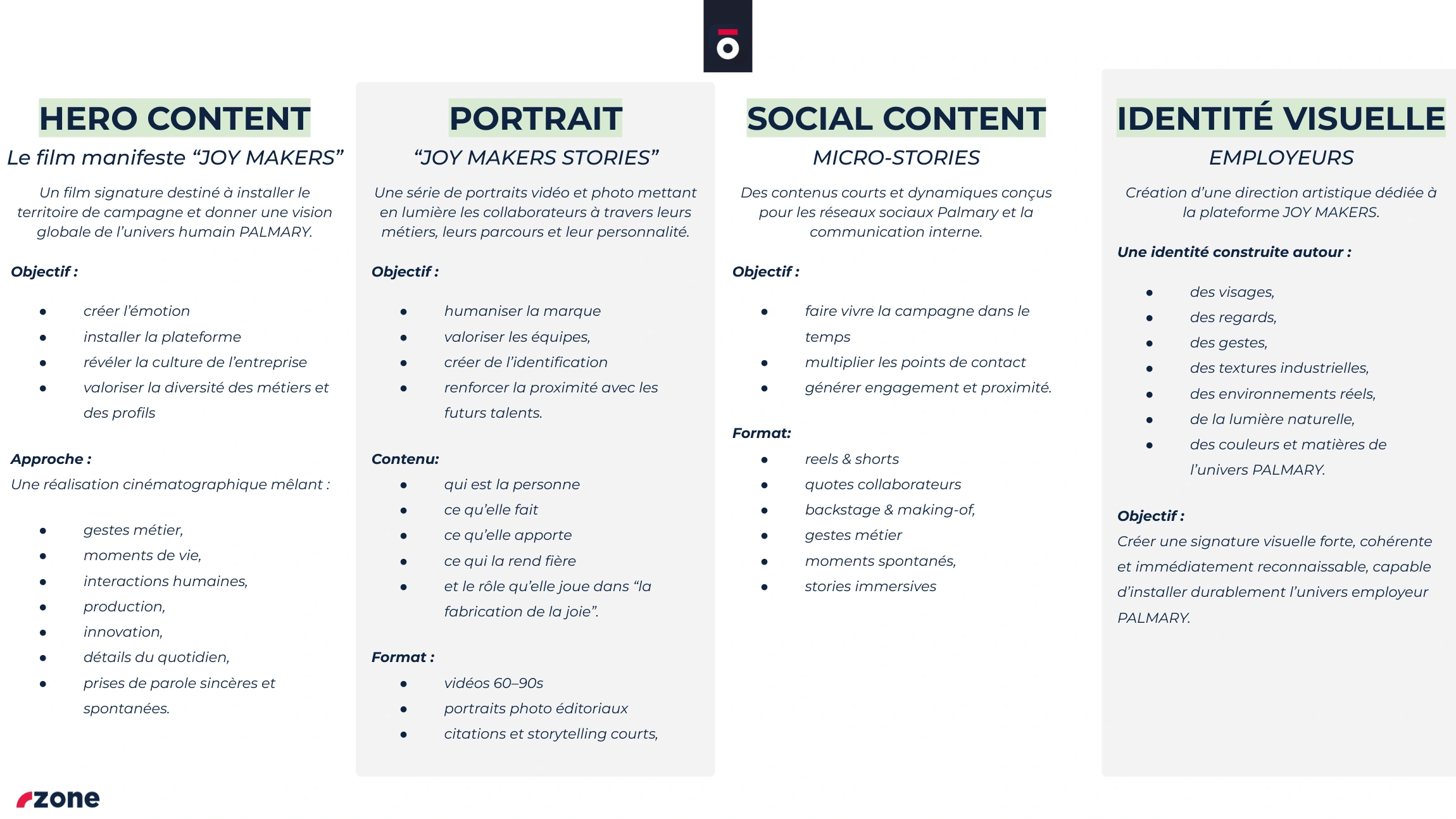
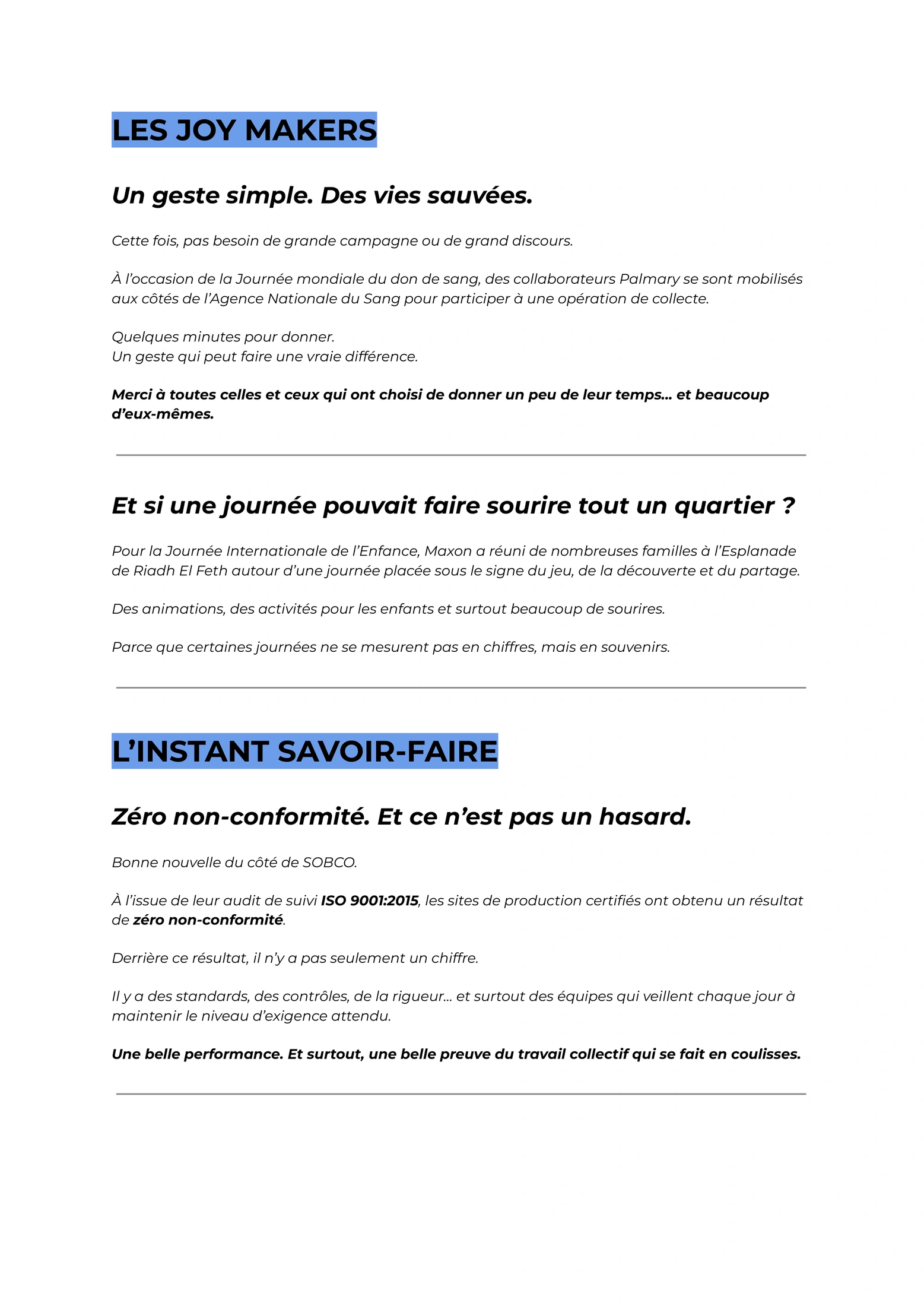
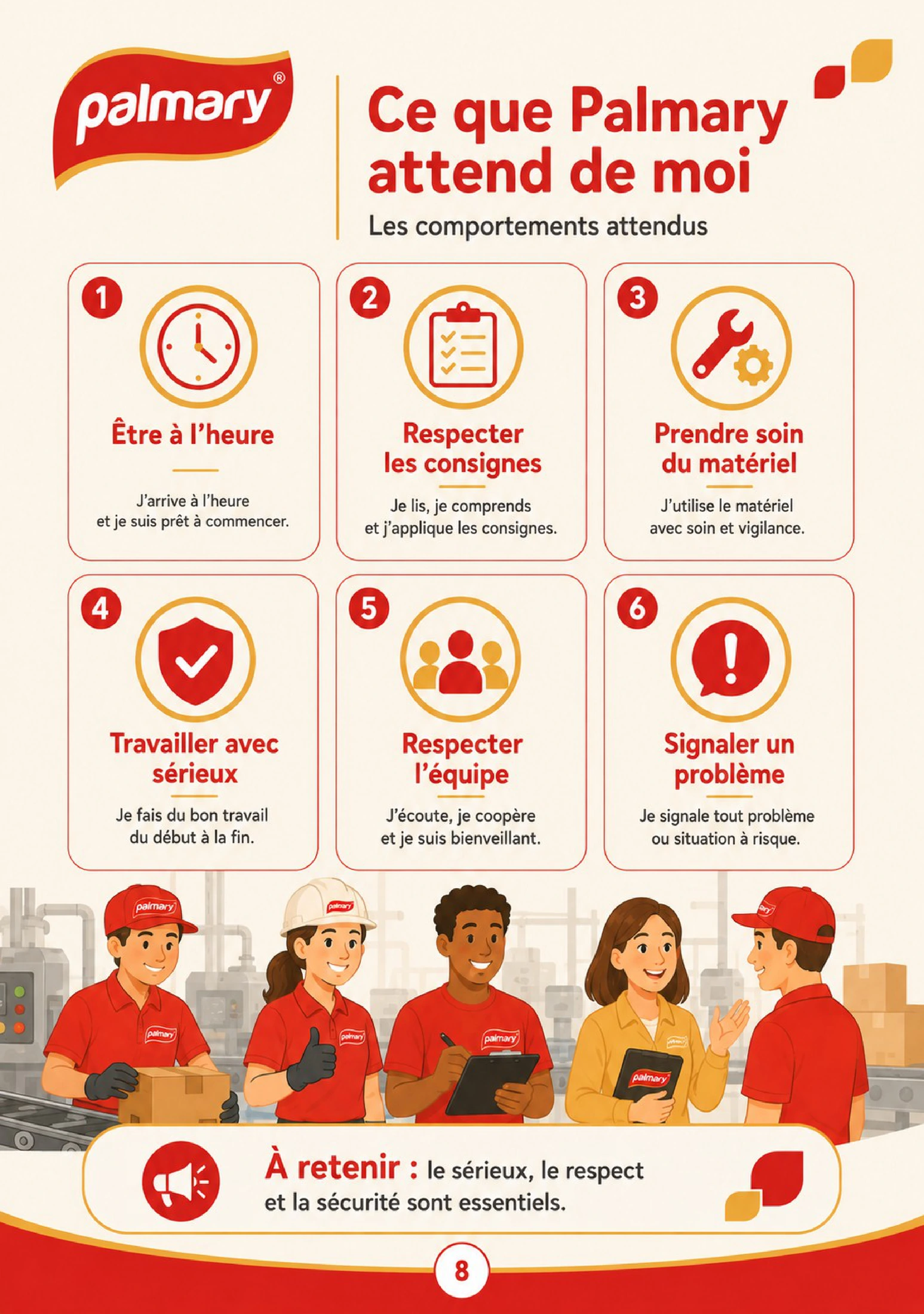
We developed JOY MAKERS, an employer-brand concept connecting the pleasure associated with Palmary’s products to the people who make those moments possible. It gave production teams, quality specialists, technicians, commercial teams and other colleagues a place in the brand’s story.
The creative framework proposed a manifesto film, employee portraits and shorter stories built around real work, personal journeys and sources of pride. It established a direction for employer communication that could help prospective candidates understand the organization through its people, while giving existing employees greater visibility within the group’s own narrative.
Giving the culture a regular voice
A group’s culture also becomes visible through the way it tells its everyday stories. Separate initiatives can reveal a common set of convictions when their meaning is made clear.
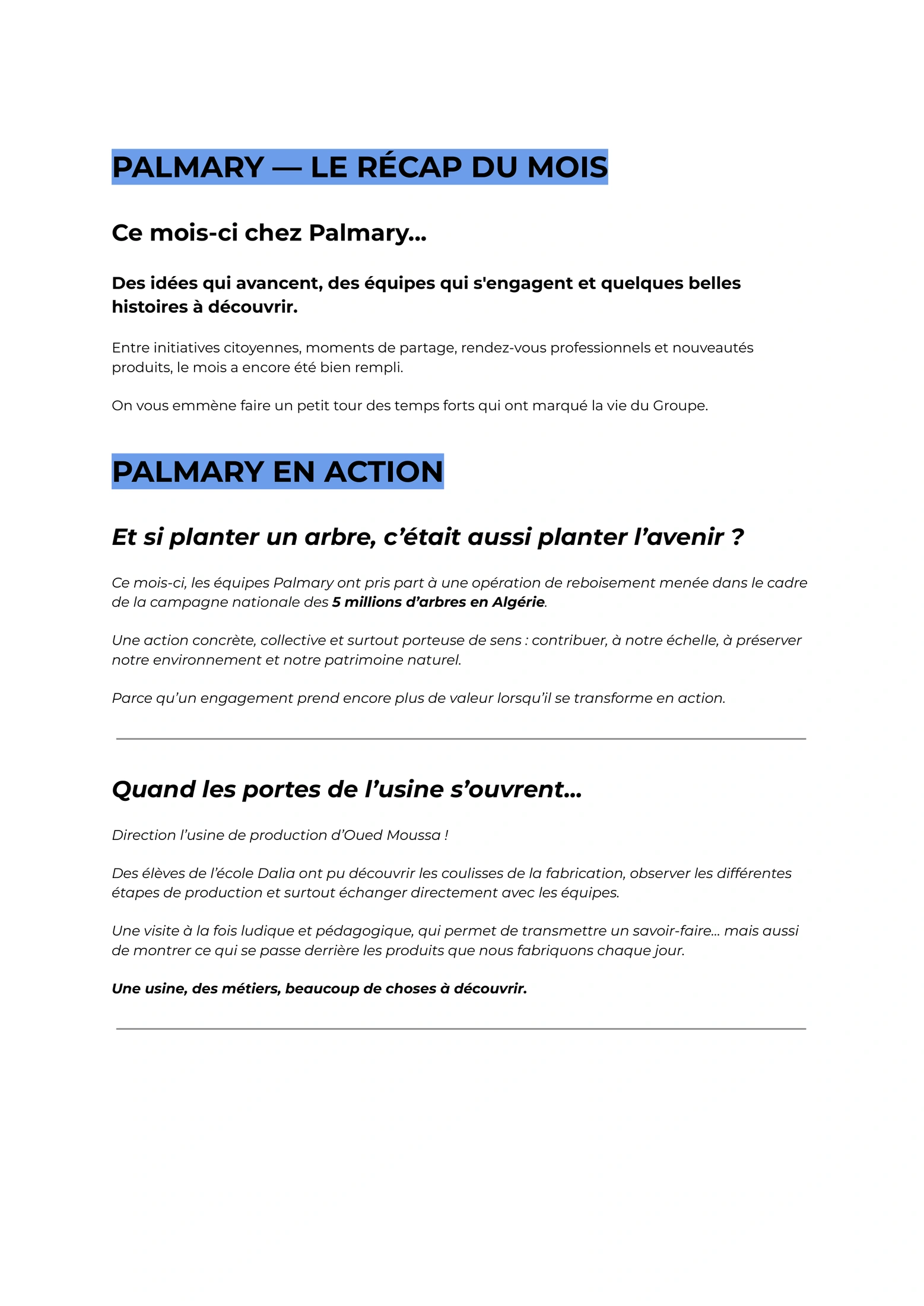
We developed the editorial approach and content for Palmary’s internal newsletter, connecting news from across the group to the people and principles behind it. A factory visit became a story about passing on know-how. A quality milestone revealed the collective discipline behind a standard. A community initiative showed how an engagement took shape through employees’ actions.
This gave Palmary a format for connecting different parts of its life as an organization. Teams could discover work beyond their own environment and understand how individual achievements contributed to a wider group story.
Bringing the same thinking into recruitment
The experience of a company begins before someone joins it. Recruitment is an early encounter with its standards, its ways of communicating and the attention it gives to people.
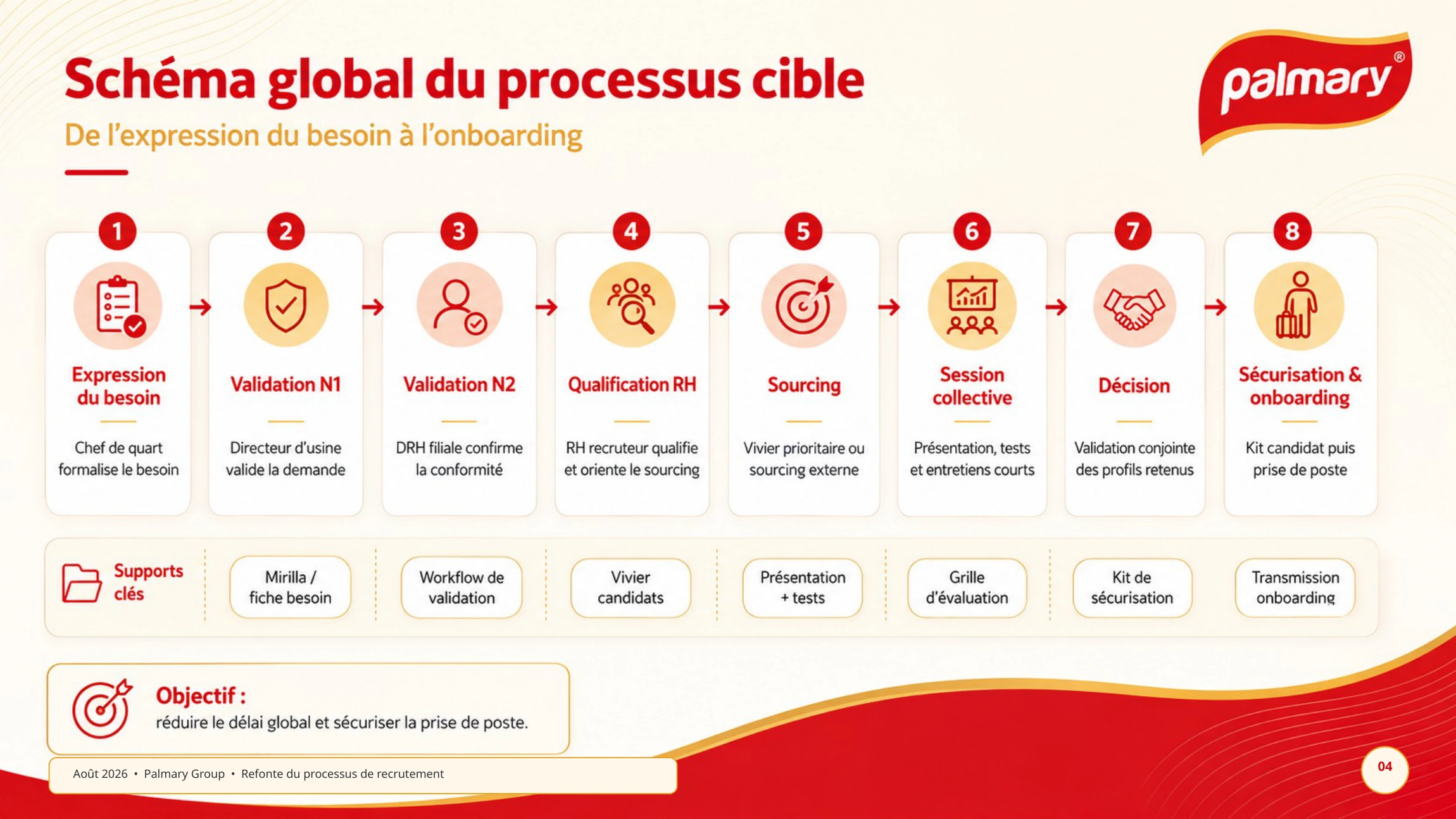
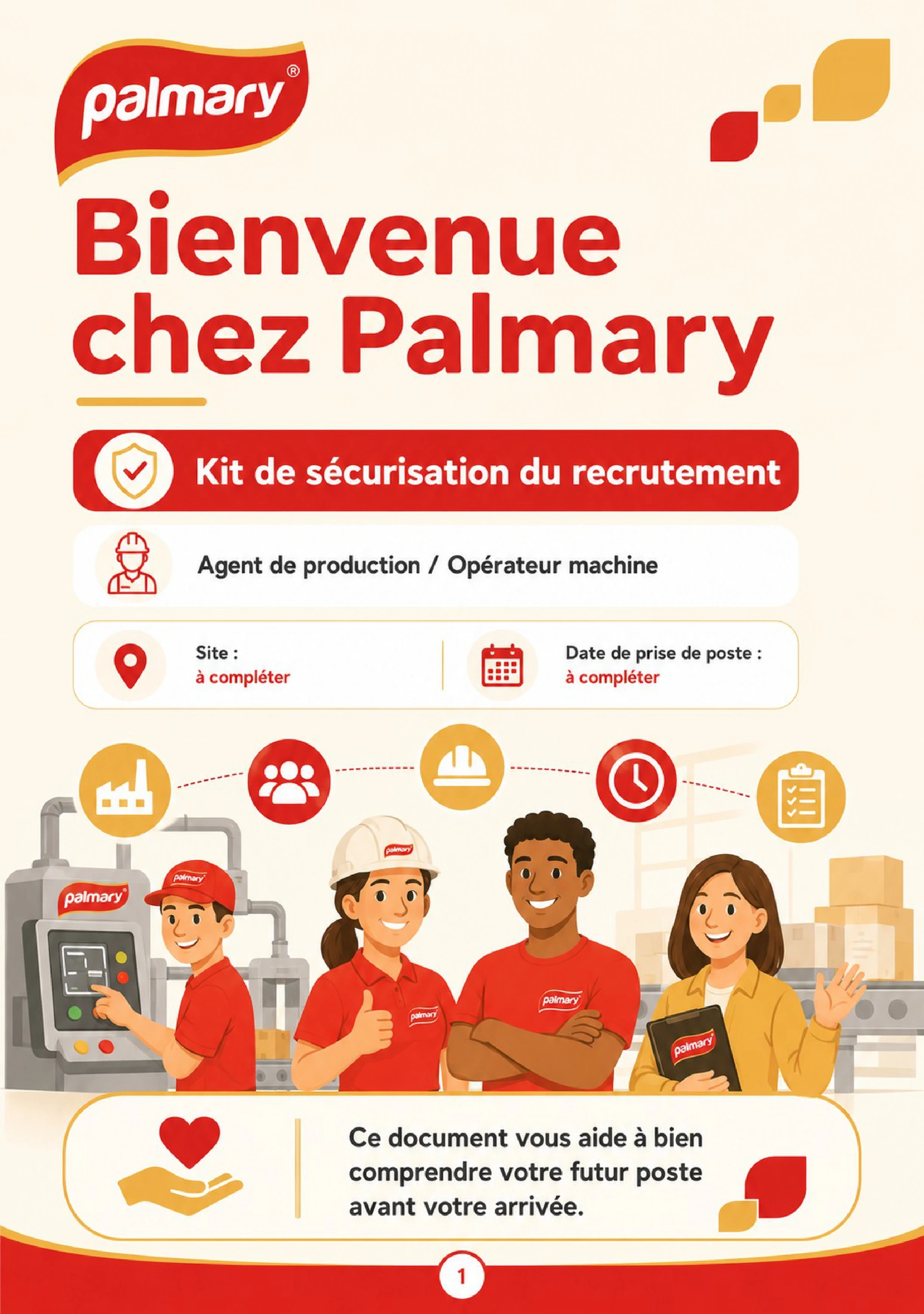
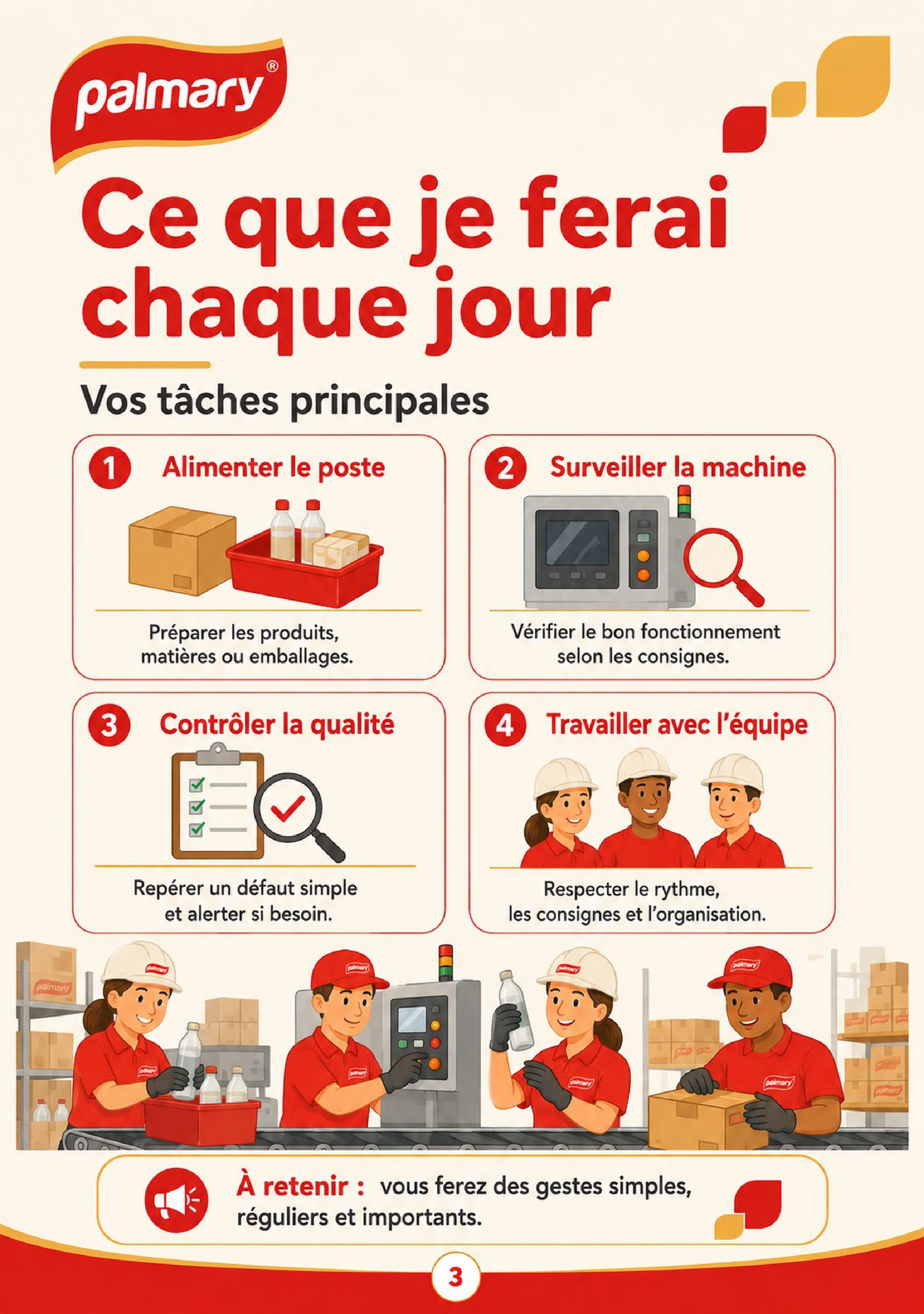
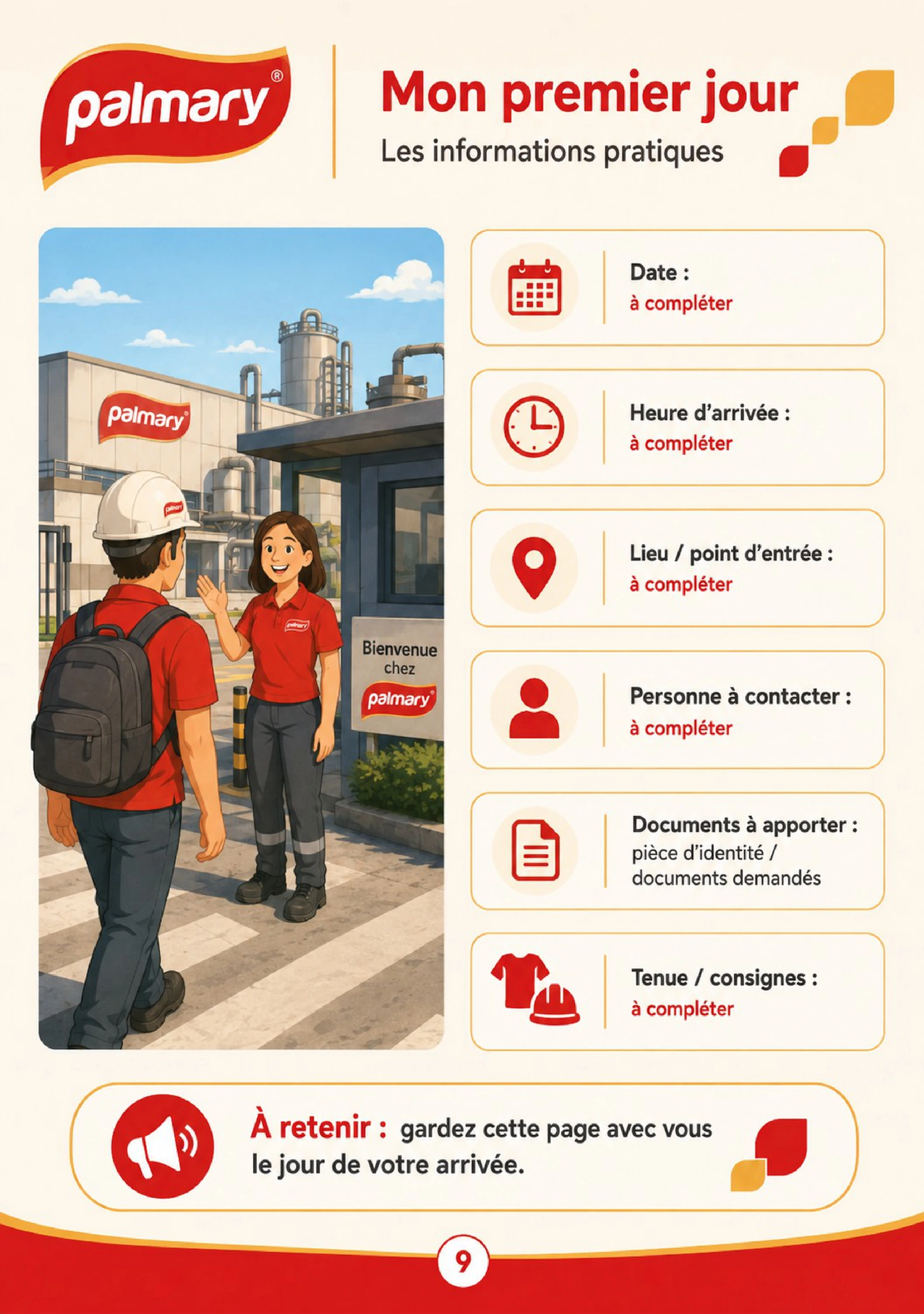
We worked from Palmary’s existing recruitment process to structure the candidate journey and develop its supporting kit. The work clarified the stages of the process, the role of the people involved and the materials needed to support a more coherent experience.
It connected the employer ambition to a practical HR touchpoint. Alongside the work on culture and communication, the recruitment kit gave teams a clearer reference for how Palmary could introduce itself to future colleagues and guide them through the process.

Giving know-how a place to grow
As a group expands, knowledge has to move between people, roles and locations. Experience accumulated in one part of the organization becomes more valuable when others can access it and build on it.
We developed a Palmary Academy prototype, a learning platform created for the group. It explored how training content and structured learning journeys could support the transmission of knowledge within a distributed organization.
The prototype made that ambition tangible. It provided a concrete basis for developing an internal academy around Palmary’s needs, extending the cultural work into the way people could learn, develop and prepare for new responsibilities.
What changed
Palmary gained a clearer foundation for expressing the culture behind its growth.
Leadership convictions and managers’ experiences had been brought into a common analysis. The values work had a documented basis and a language to develop. Employer communication had a creative territory centred on the people behind the products. Internal communication, recruitment materials and the Academy prototype gave different parts of that ambition a practical form.
Together, the work began to make a founder-led culture more explicit and easier to transmit across a growing organization. It gave Palmary ways to connect its history, its people and its future through a shared understanding of what the group wants to stand for.
#culturestrategy #organizationalculture #valuescharter #workshopdesign #employerbranding #creativeconceptdevelopment #internalcomms #editorialstrategy #recruitmentexperience #employeeexperience #learningexperience #digitalproductdesign